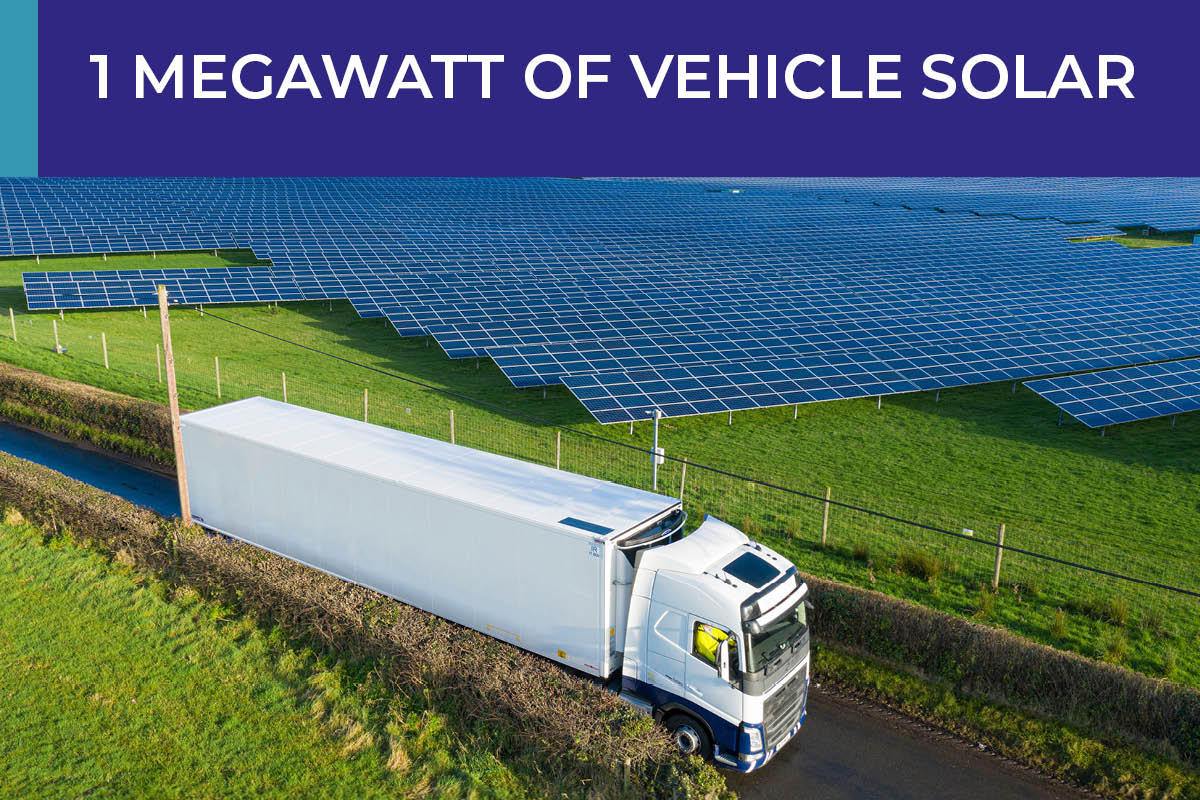
How Vehicle Solar is Prolonging the Life of Lead Acid Batteries
The quiet revolution on commercial vehicle roofs – vehicle solar panels are reducing lead-acid battery replacements and extending their lifespan according to Genie Insights’ MD Matt Reeve
For decades, lead-acid batteries have been the workhorses of the automotive industry, however battery failure remains one of the most common causes of vehicle breakdowns, with many batteries being replaced long before they reach their maximum potential lifespan. Vehicle solar panels are increasingly helping fleets address this problem.
Today, vehicle-mounted solar panels are helping to change that narrative by maintaining battery charge levels, reducing deep discharge events and significantly extending battery life while reducing the number of batteries that need replacing.
Fleet downtime caused by dead batteries can result in lost productivity, delayed deliveries, and expensive roadside assistance calls.
Solar charging solutions provide a low-cost preventative measure. Many fleet operators are now exploring roof-mounted solar systems not only to support auxiliary equipment but also to maintain battery health and reduce avoidable battery failures.
Lead-acid batteries naturally degrade over time, but several factors can dramatically accelerate this process:
- Prolonged periods of low charge.
- Deep discharges.
- Sulfation of battery plates.
- Parasitic electrical loads while parked.
- Infrequent vehicle use.
- Extreme temperatures.
Along these, sulfation is particularly damaging which occurs when lead sulfate crystals build up on the battery plates during periods of undercharging. As sulfation increases, the battery loses capacity, struggles to hold charge, and eventually fails.
Many modern vehicles continue drawing power even when switched off. Alarm systems, tracking devices, control modules, and onboard electronics can gradually drain the battery over days or weeks. For vehicles that spend extended periods parked, this often leads to chronic undercharging and premature battery replacement.
Vehicle solar panels convert sunlight into electrical energy that continuously tops up the 12 or 24V battery throughout daylight hours. Even relatively small solar panels can offset the vehicle’s standby power consumption and maintain healthy charge levels.
This continuous trickle charging provides several important benefits:
1. Preventing Deep Discharge
A fully charged battery experiences significantly less stress than one that repeatedly falls below recommended charge levels. Solar panels help maintain an optimal state of charge, reducing the likelihood of deep discharge events that shorten battery life.
2. Reducing Sulfation
Because solar systems keep batteries closer to full charge, the formation of harmful sulfate crystals is minimised which means improved battery performance and a longer service life.
3. Supporting Seasonal and Infrequently Used Vehicles
Urban delivery vehicles including those responsible for final mile deliveries and school and college minibuses and welfare vehicles are just some of those vehicles where solar charging helps maintain battery health without requiring connection to mains power.
4. Compensating for Parasitic Loads
Modern vehicles can draw a surprising amount of standby current. Solar panels offset these small but continuous loads, preventing gradual discharge while the vehicle is parked.
5. Extending a Battery’s Average Lifespan
The average automotive lead-acid battery typically lasts between three and five years under normal conditions, but batteries frequently left partially discharged often fail much sooner. By helping to maintain a healthier battery state of charge, solar maintenance charging can extend battery lifespan, with batteries often remaining serviceable beyond five years, particularly in applications where vehicles spend long periods unused. While solar charging cannot eliminate natural battery ageing, it can significantly slow the degradation caused by poor charging habits and inactivity.
For fleet operators, this can translate into measurable savings as reducing battery replacements by just a small percentage across thousands of vehicles can deliver substantial cost reductions in both parts and maintenance labour. 12V and 24V batteries typically cost on average £125 and £300 to replace but it’s the vehicle downtime which is the costly impact for fleets of a battery failure. Recently Mercedes-Benz Vans UK calculated that it costs fleets £1,172.20 per day for every van out of action and more for trucks.
Every lead-acid battery that avoids premature replacement contributes to sustainability goals. Although lead-acid batteries are highly recyclable, extending battery life remains more environmentally beneficial than replacing batteries more frequently. By helping batteries last longer, vehicle solar panels reduce the overall demand for battery production and recycling activities.
Genie Insights has supplied more than 15,000 vehicle solar solutions on LCVs, trucks and reefer trailers in the last few years, incorporating UK-manufactured solar panels from MIPV. Demand from operators looking to reduce vehicle downtime continues to rise. As vehicles become increasingly connected and dependent on electronic systems, battery maintenance is becoming more critical than ever.
Even conventional internal combustion vehicles now contain dozens of modules that continue drawing power after the engine is switched off. Therefore vehicle-mounted solar charging will become an increasingly common feature across commercial fleets.
In Summary
Vehicle solar panels are proving to be much more than a renewable energy accessory. By maintaining healthy battery charge levels, they are helping to significantly extend the lifespan of lead-acid batteries.
The result is fewer battery failures and unnecessary battery replacements, lower maintenance costs, and a reduced impact on the environment. Battery performance is also maximised as fleets get more value from every lead-acid battery installed.
As the commercial vehicle and fleet industries continue their shift towards smarter, more energy-efficient technologies, vehicle solar panels are emerging as an important tool in the ongoing effort to improve reliability, reduce waste, and extend battery life.