What is VIPV (Vehicle-Integrated Photovoltaics)?
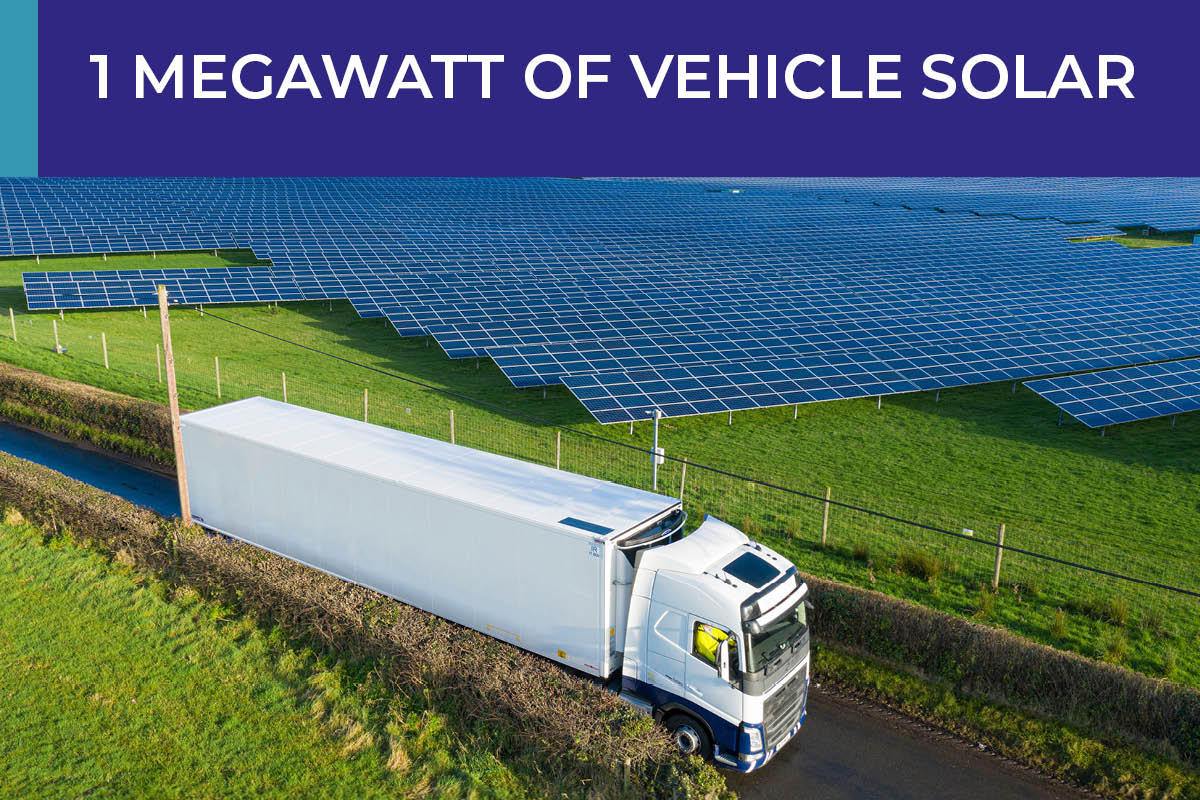
VIPV stands for Vehicle-Integrated Photovoltaics – the integration of solar photovoltaic (PV) technology directly onto a vehicle to generate energy during daylight hours.
Rather than thinking of solar as simply an additional panel fitted to a vehicle, VIPV considers how solar technology can be integrated into the vehicle and its wider electrical system to provide useful energy in real-world operating conditions.
For commercial vehicles, that energy can be used in several ways – from maintaining critical 12V and 24V batteries to supporting onboard electrical equipment or contributing to larger integrated energy systems.
How Does VIPV Work?
A typical commercial vehicle VIPV system combines a solar panel with a charge controller and the vehicle or equipment battery.
The solar panel harvests energy from available daylight. The charge controller manages that energy and delivers it to the battery or electrical system at the appropriate voltage.
VIPV doesn’t require bright sunshine to work. CIGS (copper, indium, gallium, selenide) solar technology can harvest energy throughout daylight hours, including during cloudy and lower-light conditions.
The amount of energy generated depends panel size and technology, available daylight, location, season, shading, vehicle orientation and the available installation area.
What Can VIPV Be Used for on Commercial Vehicles?
How VIPV is used depends on the vehicle and its power requirements.
One of Genie Insights’ most common applications is battery protection,where solar provides an ongoing source of energy during daylight hours to help maintain 12V or 24V batteries and offset electrical loads from equipment such as telematics, trackers, cameras, monitoring systems and vehicle electronics.
VIPV can also provide supplementary power for fixed onboard equipment, reducing demand on the vehicle’s primary electrical system.
Where energy requirements are greater and there is sufficient installation area, solar can form part of a wider vehicle integrated energy system, working alongside batteries and other energy sources to power equipment on or close to the vehicle, such as tail lifts, microwaves, kettles or power tools.
Why Is VIPV Relevant to Commercial Vehicles?
Commercial vehicles rely on electrical power for a growing range of systems and equipment. At the same time, electrification is adding further demands, including the need to maintain auxiliary batteries and manage energy use carefully.
Is VIPV Just for Electric Vehicles?
No. Although VIPV is popular for electric vehicles, the technology can provide benefits across both ICE and electric commercial fleets.
On conventional ICE vehicles, solar can maintain batteries, help support electrical equipment and, in some applications, reduce reliance on the engine or alternator for supplementary power.
On electric vehicles, solar can maintain auxiliary batteries and offset electrical loads that would otherwise draw energy that needs to be replenished from the vehicle’s primary energy source.
This means the same underlying technology can be applied across conventional, hybrid and electric commercial vehicles.
What Makes a Solar System Suitable for VIPV?
Vehicle solar technology operates in a very different environment from stationary photovoltaic installations. Weight, flexibility, vibration resistance, mechanical shock, reliability, weather resistance, safety and integration with vehicle electrical systems all need to be considered. For commercial vehicle applications, the complete system therefore needs to be designed around the realities of a working vehicle.
Genie Insights uses lightweight, flexible CIGS solar technology, manufactured by MIPV, combined with vehicle-ready charge controllers and associated components to create systems designed specifically for commercial fleet applications.
Our approach considers the complete solution – including solar technology, voltage, charge control, installation method, electrical demand and the way the vehicle is used, rather than just selecting a panel based on headline wattage.
Setting the Benchmark for Commercial Vehicle VIPV
As VIPV adoption grows, we believe fleets should expect the same focus on quality, safety and engineering assurance from vehicle solar technology as they would from other systems integrated into a commercial vehicle.
Genie Insights’ vehicle solar solutions are backed by an extensive programme of testing, certification and product assurance covering areas including vibration and mechanical shock, environmental performance, electrical safety, electromagnetic compatibility, fire performance, ingress protection, bonding and component quality.
We are confident that no other vehicle-integrated photovoltaic (VIPV) solar solution on the market can match the breadth of testing, certification and compliance credentials achieved by Genie Insights.
Explore our Solar Product Assurances
The Future of VIPV
Vehicle-Integrated Photovoltaics is attracting increasing international attention as vehicle manufacturers, van converters and fleet operators look for new ways to manage onboard energy and improve transport efficiency.
Research through the International Energy Agency’s PVPS Task 17 programme is examining the potential, technical requirements and challenges associated with integrating photovoltaic technology into vehicles.
For commercial fleets VIPV is no longer a technology for the future. Solar is already being fitted to commercial vehicles to protect batteries, power onboard equipment, improve reliability and reduce dependence on conventional energy sources.
Genie Insights has been developing and deploying commercial vehicle solar solutions since 2019, applying the technology to refrigerated transport, eLCVs, HGVs, waste and recycling vehicles and other specialist fleet applications.